
On this page
In the sky
A thin crescent appears after sunset, low in the western sky. Its illuminated portion grows from one evening to the next. The faint glow sometimes visible on the darker part is earthshine: sunlight reflected from Earth onto the Moon.
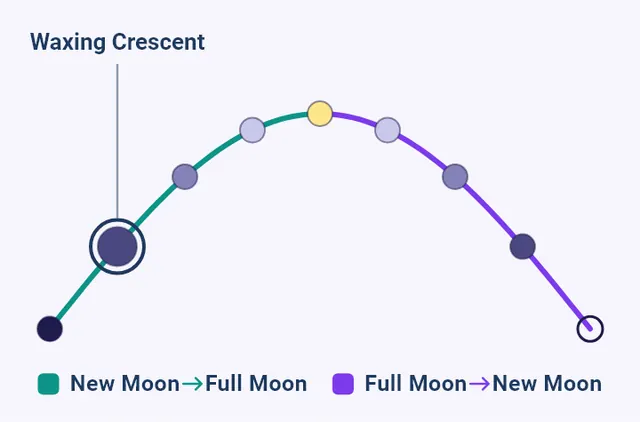
Symbolic meaning
The first sliver of light — the seed sprouts. Momentum is fragile and needs tending: take small, concrete steps and keep faith in what you began at the New Moon.
The growing light gives the seed its first visible form. In the symbolic cycle, this is the passage from a private wish to sustained effort. What is new still needs protection and repetition; confidence can grow through modest actions before there is much external confirmation.
Work with this phase
Return to your new-Moon intention and take its first practical step. Give it a specific place in your day and prepare what you need in advance. Identify one obstacle you can reduce, such as a distraction or an unrealistic timetable, and repeat the action before adding another goal.
Good for
- First concrete steps
- gathering resources
- learning
- building habits
- commitment.
Meditation
Avoid
- Doubting or abandoning the new plan
- impatience
- scattering focus.
Journal Reflections
Name one small action you will take today toward your goal.
What helps this beginning take root? What small action am I willing to repeat even without immediate results?
Tradition and sources
The symbolism of the eight stages draws on twentieth-century humanistic astrology. These exercises offer a personal way to work with the cycle. Here you can explore both the astronomical observations and the sources of the tradition.