
On this page
In the sky
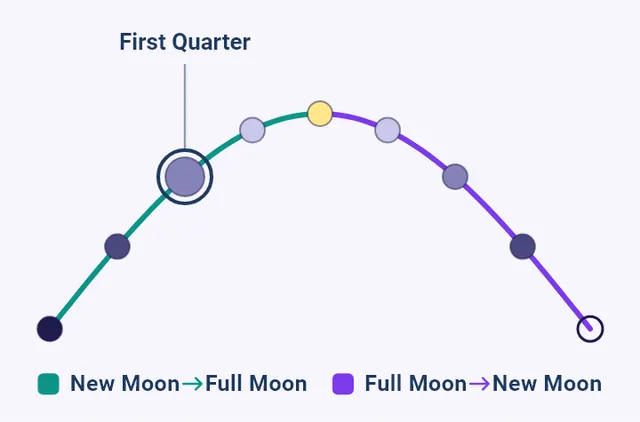
Half of the visible disc is illuminated and the light is still increasing. The first-quarter Moon is often easy to see in the afternoon and evening. The name refers to a quarter of the lunar cycle, even though half of the disc looks bright.
Symbolic meaning
Light and dark stand in balance — a crossroads of action. Obstacles surface now precisely so you can push through them. Decide, adjust, and commit your effort.
This is a turning point in the symbolic cycle: the initial direction meets practical resistance. Its theme is decision and constructive action. Friction can reveal what needs changing in your method, your resources or your priorities. Working with this phase means giving the intention a workable structure.
Work with this phase
Name the main obstacle to your intention in one sentence. List two possible responses, choose the one you can sustain and take a concrete step within the next day. Then note whether it helped. This small experiment turns a vague difficulty into something you can understand and adjust.
Good for
- Decisions
- pushing through resistance
- problem-solving
- course corrections
- assertive action.
Meditation
Avoid
- Hesitation
- avoiding conflict
- giving up at the first difficulty.
Journal Reflections
Take one decisive action you have been postponing.
What decision have I been postponing? What does this obstacle teach me about the support or structure I need?
Tradition and sources
The symbolism of the eight stages draws on twentieth-century humanistic astrology. These exercises offer a personal way to work with the cycle. Here you can explore both the astronomical observations and the sources of the tradition.