
On this page
In the sky
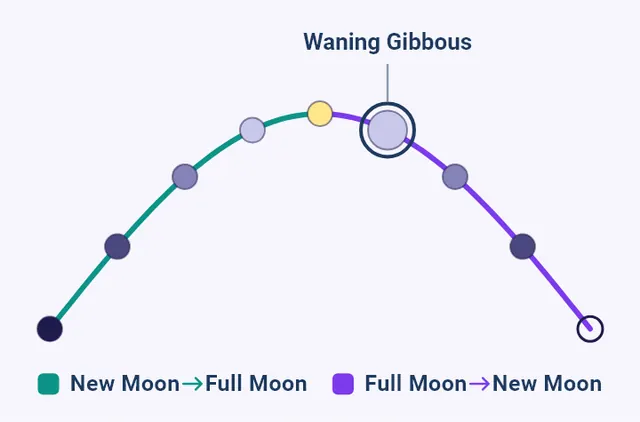
More than half of the disc remains illuminated, but the bright area is shrinking. The Moon rises later than at full Moon and can remain visible into the morning. Its rounded shape resembles the waxing gibbous; what distinguishes it is the decreasing light.
Symbolic meaning
The light begins to recede — the harvest is in, and now it is shared. This is the season to give back, teach, and digest the lessons of the peak.
After culmination, the symbolic emphasis moves towards sharing and integration. This phase is also called disseminating in humanistic astrology. Experience becomes more valuable when you can explain what it taught you and carry that understanding into daily life. Giving thanks can include acknowledging the people who made that learning possible.
Work with this phase
Write three short lines: what worked, why it helped and where you could use it again. Share one useful insight with someone who wants to hear it. Turn another insight into a simple habit or reminder. Keep your account grounded in something you have actually experienced.
Good for
- Sharing knowledge
- generosity
- communication
- gratitude
- integrating lessons.
Meditation
Avoid
- Hoarding
- isolation
- starting brand-new ventures.
Journal Reflections
Share something you have learned with someone.
What have I learned through experience this cycle? How could that learning benefit my everyday life or someone else?
Tradition and sources
The symbolism of the eight stages draws on twentieth-century humanistic astrology. These exercises offer a personal way to work with the cycle. Here you can explore both the astronomical observations and the sources of the tradition.