
On this page
Take care of yourself
Shadow work can surface difficult emotions or memories. It is not a substitute for professional mental health care. If you feel overwhelmed, pause, ground yourself, and reach out to someone you trust or a professional. In a crisis, contact your local emergency number or a crisis helpline.
Not everything in the dark is dark
We tend to imagine the shadow as a bag of unwanted things—anger, envy, greed. But Jung insisted the shadow holds gold as well as lead. Robert A. Johnson called this the golden shadow: the talents, the beauty, the largeness of soul, the capacity for love and leadership that we buried alongside the "negative" traits. The shadow is simply what is unlived, and much of what goes unlived is luminous.
Why would anyone repress their own gifts? Because gifts can be as unsafe as faults. A child praised only for being small and helpful learns that brightness invites envy or abandonment. A family that fears ambition teaches that shining is a betrayal. A culture that mistrusts sensitivity teaches the sensitive to hide. So the gift goes underground with everything else, and we grow up strangely convinced of our own ordinariness.
Admiration as a clue
Here is the golden shadow's secret door: what we admire. When you feel a pang of longing at another person's courage, creativity, warmth, or freedom—when your eyes sting a little watching someone live boldly—you are almost certainly looking at your own unlived potential. Admiration that carries an ache is projection too, but projection of the gold.
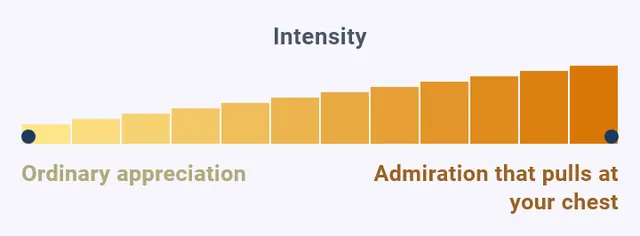
The measure is similar to the projection of faults: intensity. Ordinary appreciation ("she sings well") is just appreciation. But the admiration that pulls at your chest, that makes you feel both drawn and quietly diminished, points to a capacity you carry unclaimed. The other person is not doing something alien to you. They are showing you a room in your own house you have not entered.
The risk of staying small
Reclaiming the golden shadow can be more frightening than owning our faults. To admit "I too have this brightness" is to accept responsibility for living it. It ends the comfortable story that greatness belongs to others. Jung understood that individuation—becoming whole—asks us to carry our own light, which is a real weight.
Go gently here. For some, the reason a gift was buried is bound up with early wounding or trauma, and touching it can bring grief for the years it went unlived. That grief is part of the reclaiming, but it is not something you must carry alone; if it opens more than you can hold, a qualified therapist is the right companion. Shadow work, gold included, is not a substitute for that support.
Cards of the golden shadow
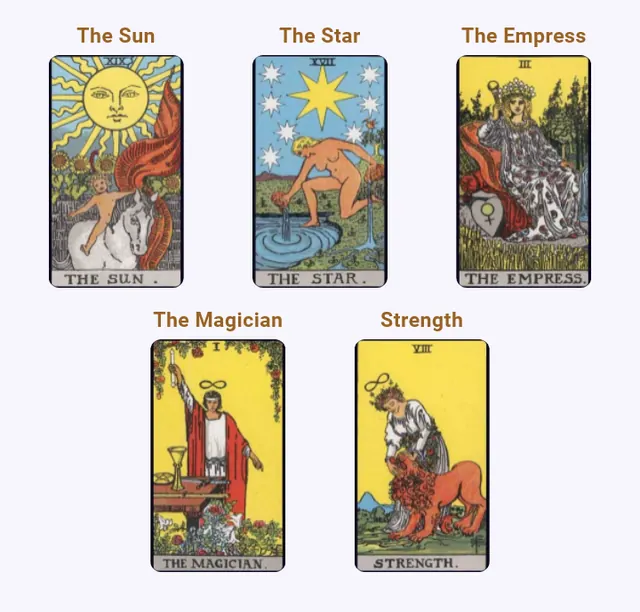
In tarot, the radiant cards can act as invitations rather than descriptions. The Sun, the Star, the Empress, the Magician, Strength—when one of these draws a wistful "if only that were me," treat it as a mirror of the golden shadow. Ask: what gift is this card asking me to own? The Magician's competence, the Star's hope, Strength's gentle power—these may be yours, waiting. A reading can become the moment you first say yes to a light you have long admired from the shadows.
Key Points
- The shadow holds gold as well as lead: buried gifts, beauty, and capacity, not only flaws
- Gifts are repressed because brightness once felt unsafe—inviting envy, abandonment, or rejection
- Aching admiration of others is projection of the golden shadow onto them
- Reclaiming gifts can be more frightening than owning faults, because it demands we live them
- Individuation asks us to carry our own light, which is a genuine responsibility
- Radiant cards (Sun, Star, Strength, Magician) can mirror unclaimed potential
Exercises
- Admiration inventory: List five people you deeply admire and the exact quality in each. Then read the list as a description of your own unlived gifts.
- The ache test: Recall a moment of wistful longing watching someone shine. Journal: "The gift I saw was ___. If I owned even a little of it, my next small step would be ___."
- Radiant-card draw: Pull cards until you reach one that feels "too bright for me." Ask what gift it names, and write one way to practise it this week.
- Permission letter: Write a short letter from your future, integrated self, giving yourself permission to live one buried gift.
Further Reading
- Robert A. Johnson - "Owning Your Own Shadow" (1991)
- C.G. Jung - "Man and His Symbols" (1964)
- Rachel Pollack - "Seventy-Eight Degrees of Wisdom" (1980)