On this page
The image and its symbols
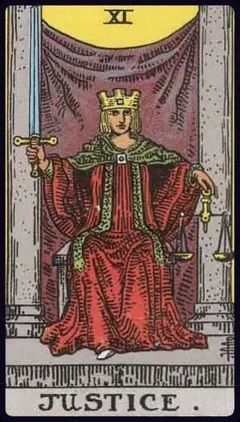
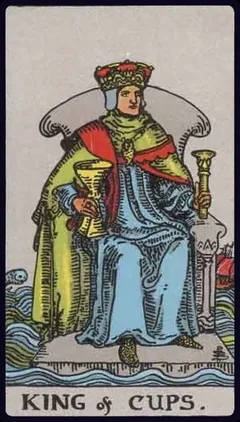
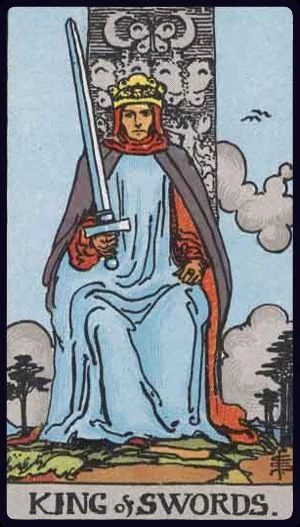
The King 'sits in judgment, holding the unsheathed sign of his suit' — the bare sword raised, ready for use rather than ceremony. Waite observes that he deliberately recalls the conventional figure of Justice among the Trumps Major, and he may indeed embody that virtue; but more precisely, Waite says, he represents 'the power of life and death, in virtue of his office.' Where Justice is a principle, this king is the person charged with applying it: enthroned, composed, and accountable for every decision he hands down. Nothing about him is casual — the blade is out because judgment is his daily work.
Keys
- Unsheathed sword
- Judgment active and ready; decisions made openly, with nothing concealed in the scabbard.
- Seat of judgment
- Authority held as an office and a duty, not a personal indulgence.
- Echo of the Justice trump
- Waite links him to impartial law; his rulings aspire to fairness, not whim.
- Composed, enthroned posture
- Command exercised from stillness; power that persuades by steadiness rather than noise.
Upright meaning
- authority
- judgment
- command
- law and ethics
- keen intellect
- counsel
Waite defines this king by a single idea and everything that flows from it: judgment, 'and all its connections — power, command, authority, militant intelligence, law, offices of the crown.' He is the mind in its governing role. Where other kings rule through warmth or wealth, this one rules through the quality of his thinking: he gathers the facts, weighs them without favoritism, and delivers a decision he is prepared to stand behind. Waite adds that he holds the power of life and death by virtue of his office — a reminder that real authority is measured by the seriousness of its consequences.
In a reading, he often points to a decision that must be made with the head fully engaged: contracts, rulings, negotiations, matters of principle. He may also arrive as a person — Waite's supplement names the lawyer, the senator, the doctor — a seasoned professional whose counsel deserves attention.
Either way, the instruction is the same: think before you act, say exactly what you mean, and accept responsibility for the verdicts you hand down. Fairness is not softness; it is rigor applied evenly to everyone, including yourself.
Love
In relationships he brings structure and straight talk: clear agreements, promises kept, and affection expressed through reliability more than poetry. He may describe a partner who is steady, articulate, and somewhat reserved — devoted in deed, sparing in sentiment. The invitation is to decide rather than drift: define what you want, state your terms honestly, and honor them. Just guard against turning the dinner table into a courtroom; a fair judge also knows when to recess.
Work & money
This is one of the strongest cards for professional life. It favors leadership, promotion into decision-making roles, and any matter involving contracts, regulation, or expert advice — echoing Waite's lawyer, senator, and doctor. Master the facts before the meeting and let command of detail do the persuading. Financially, it counsels governed money: clear terms, documented agreements, decisions made on analysis rather than hope. If a dispute is brewing, seek qualified counsel early.
Spirituality
His path is the discipline of the mind in service of what is right. Truthfulness becomes a practice: examining beliefs as carefully as evidence, refusing comfortable self-deception, letting ethics govern conduct even when no one is watching. Waite's link between this king and Justice suggests that clear thinking is itself a form of devotion — the intellect, honestly used, becomes an instrument of the higher law rather than a substitute for it.
Reversed meaning
- cruelty
- abuse of power
- ruthlessness
- perfidy
- ill intent
- tyranny
Reversed, Waite strips the office of its virtue and leaves only the blade: 'cruelty, perversity, barbarity, perfidy, evil intention.' This is authority turned against the people it was meant to serve — the judge who has decided the verdict before hearing the case, the expert who uses knowledge to dominate, the leader whose word cannot be trusted. Intelligence remains, but it now serves appetite and grievance rather than fairness. The card can warn of a man of bad faith in your affairs, or of your own reason bent to justify what you have already chosen to do. Waite's supplementary note adds a very practical caution: put an end to a ruinous lawsuit. Some battles are lost by continuing to fight them; withdrawing from a corrosive dispute can be the most intelligent verdict available.
Love
Watch for control wearing the mask of reason: arguments won by cross-examination, coldness deployed as punishment, or promises made in bad faith. If every disagreement becomes a trial, no one wins the relationship. Step down from the bench and speak as an equal.
Work & money
Beware a superior or rival who wields authority harshly or negotiates in bad faith. Document everything, keep your own conduct impeccable, and avoid giving such a person ammunition. Heed Waite's caution about ruinous disputes: a draining conflict may cost far more than any victory could ever return.
Spirituality
Intellect without conscience becomes a tyrant within — rationalizing harm, judging others mercilessly, silencing the quieter voice of the heart. Ask not only whether you are right, but whether you are just. Power over others is no substitute for mastery of yourself.
Yes or no?
Yes
A card of lawful power and capable command — when reason and fairness lead, the outcome favors you.
Advice of the day
Today, be the fair judge of your own affairs. Gather the facts before forming an opinion, and make the decision you have been deferring — cleanly, on the merits, without theater. Say precisely what you mean and put important agreements in writing. If a dispute is draining you beyond any possible gain, consider Waite's counsel and end it. Authority earned through fairness will outlast anything won through force.
Reflections
- What decision are you avoiding that only clear, impartial thinking can settle?
- Where do you hold authority over others — and how fairly are you using it?
- Is there a draining conflict in your life that wisdom says to end rather than win?
I think clearly, judge fairly, and stand behind my word.