
On this page
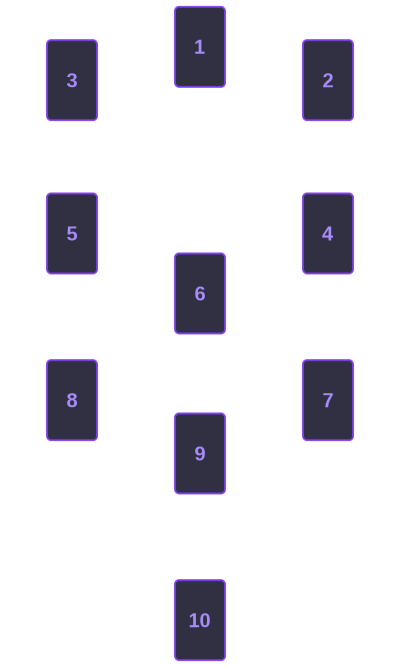
- Kether
- Chokmah
- Binah
- Chesed
- Geburah
- Tiphareth
- Netzach
- Hod
- Yesod
- Malkuth
Purpose of this Spread
The Tree of Life is the map of the Kabbalah: ten spheres, the sephiroth, joined in three columns, through which anything passes on its way from idea to fact. Laid on that map, ten cards show a question at every level at once: why it exists, what drives it and what shapes it, what helps it and what tests it, what you want, what you think, what lies underneath and what finally comes of it.
When to Use
Use it for the large questions that deserve an hour: a vocation, a relationship seen whole, a turning point in your life. It asks for calm and for some familiarity with the cards.
When to Avoid
It is too much for an everyday question or a quick decision. If the names of the sephiroth are new to you, read the meaning of each position slowly the first time, or begin with a shorter spread.
How to Read
Read from the top down, following the order of the numbers, which zigzags from right to left like a flash of lightning. The three upper cards are the idea: Kether, Chokmah and Binah. The middle ones are the forces at play: Chesed and Geburah pull in opposite directions, and Tiphareth, in the centre, reconciles them. Netzach and Hod are what you feel and what you think; Yesod is what sustains it all from below; Malkuth is the result you can touch. Read by columns as well: the one on the right gives, the one on the left restrains and the one in the middle balances.
History & Tradition
The diagram of the ten sephiroth belongs to Jewish Kabbalah and took its familiar shape between the Middle Ages and the seventeenth century. Its link with tarot is much later: it was made by French occultists in the nineteenth century and developed by the Hermetic Order of the Golden Dawn, founded in London in 1888, whose long divination method, the Opening of the Key, ends by dealing the whole deck into ten piles on the Tree. Reading one card for each sephira is the simplified form in general use today; the wording of the positions is our own.
Card Relationships
- Chesed and Geburah: what gives and what limits, the two arms of the Tree
- Kether and Malkuth: the purpose at the top and the result at the bottom
- Netzach and Hod: what you feel and what you think about it
Similar Spreads
If you like this, try these
Celtic Cross · 10 Cards · Advanced