
On this page
The last lesson gave you the four elements. This one gives you the single map that the entire dignities block is built on: which elements are friendly, which are hostile, and which are merely neutral to one another. Learn this 4×4 grid and you can dignify any pair of cards on sight.
The rule behind the map
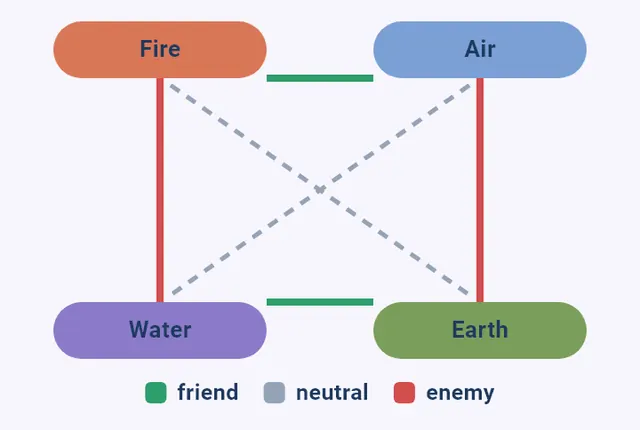
You do not need to memorise a random table. Everything follows from the active/passive polarity of Lesson 1 (Fire and Air active; Water and Earth passive):
Friends — they strengthen each other.
- Same element — maximum reinforcement (two Wands double the fire).
- Fire + Air — both active, they fan each other.
- Water + Earth — both passive, they nourish each other.
Enemies — they weaken each other.
- Fire ↔ Water — steam; each cancels the other.
- Air ↔ Earth — the wind cannot move the mountain.
Neutrals — they colour each other only lightly.
- Fire + Earth
- Air + Water
Neutrals share no polarity but are not opposites; they modify gently rather than amplify or clash.
The matrix
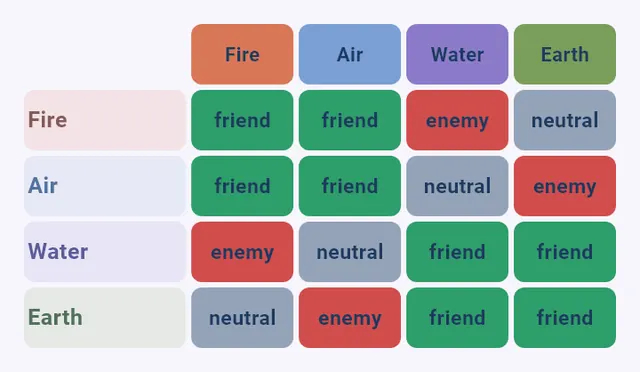
| Fire | Air | Water | Earth | |
|---|---|---|---|---|
| Fire | friend | friend | enemy | neutral |
| Air | friend | friend | neutral | enemy |
| Water | enemy | neutral | friend | friend |
| Earth | neutral | enemy | friend | friend |
A warning that saves you from every beginner's mistake
"Friend" does not mean good, and "enemy" does not mean bad. The dignity describes intensity versus friction, not fortune. Two difficult cards that are friends will intensify the difficulty, not soften it — the Ten of Swords beside the Three of Swords (both Air, both painful) is more crushing, not less. Conversely, an "enemy" pairing can be exactly what a stuck reading needs: friction breaks a deadlock.
So read a friendly pair as "turn the volume up" and an enemy pair as "these two pull against each other" — then decide, from the actual cards, whether that is welcome or a warning.
Three worked pairs
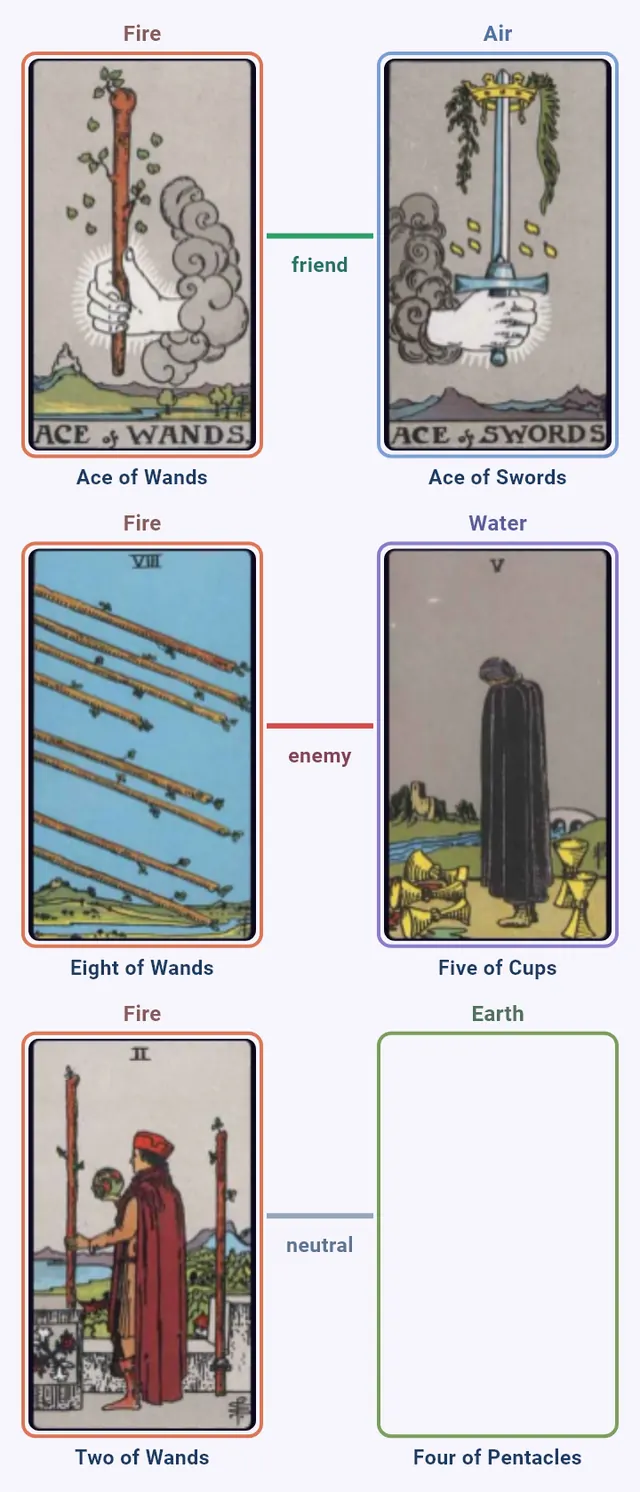
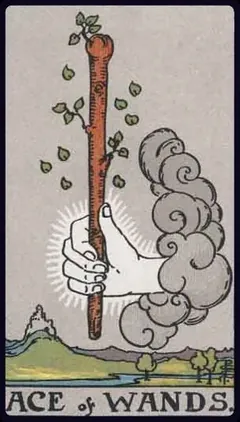
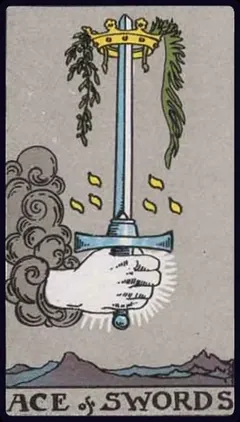
Ace of Wands + Ace of Swords (Fire + Air, friends). Two active elements reinforcing: a brilliant idea (Air) executed with decisive energy (Fire). Inspiration and will pulling in the same direction — a green light.
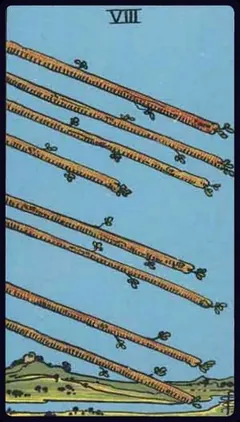
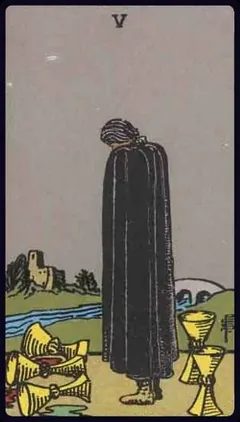
Eight of Wands + Five of Cups (Fire + Water, enemies). The rush to move forward (Fire, speed) collides with grief that has not finished (Water, loss). The elements fight, and the querent feels the fight as internal conflict — pushing ahead while still mourning.
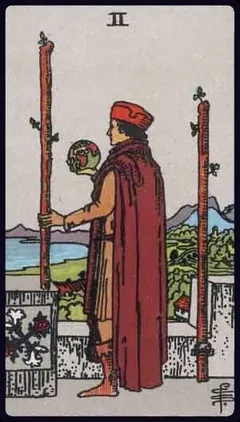
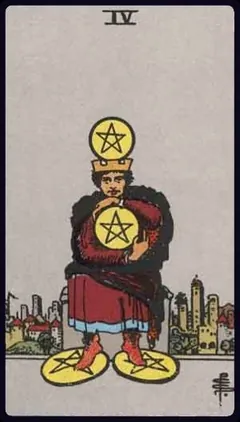
Two of Wands + Four of Pentacles (Fire + Earth, neutral). Planning energy (Fire) meets the desire to hold and secure (Earth). Neither reinforcement nor friction — energy looking for a practical form to settle into. A gentle modification, no more.
Where this goes next
This map is the skeleton. The following lessons put flesh on it: exact strengthen/weaken rules for triads, the special behaviour of the court cards, and what happens when a Major sits between two Minors. But every one of those refinements is just this friend/enemy/neutral grid, applied with more precision.
COMBINATION EXAMPLES
Key points
- Friends (strengthen): same element, Fire + Air, Water + Earth.
- Enemies (weaken): Fire ↔ Water, Air ↔ Earth.
- Neutrals (light modification): Fire + Earth, Air + Water.
- The whole matrix derives from active/passive polarity — no blind memorising needed.
- "Friend" ≠ good and "enemy" ≠ bad: dignity is intensity vs. friction, not fortune.
- Two difficult friendly cards intensify the difficulty rather than soften it.
Exercises
- Draw the 4×4 matrix from memory, then check it against the lesson.
- Deal random pairs and, for each, name both elements and label the pair friend / enemy / neutral before reading any meaning.
- Find a friendly pair of two hard cards (e.g. two Swords) and state in one sentence how their friendship intensifies rather than softens.
- Take an enemy pair and describe the internal conflict it points to in a real question of your own.
SOURCES & READING
- Golden Dawn, "Book T" (in Israel Regardie, "The Golden Dawn", 1937)
- Robert Wang, "The Qabalistic Tarot" (1983)
- Benebell Wen, "Holistic Tarot" (2015)
- Mary K. Greer, "21 Ways to Read a Tarot Card" (2006)
- Rachel Pollack, "Seventy-Eight Degrees of Wisdom" (1980)