
On this page
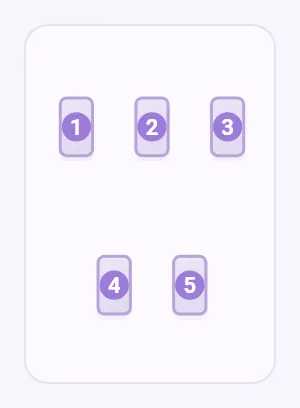
- Timeframe
- Building Factors
- Catalyst
- Obstacles to Timing
- Event Nature
Purpose of this Spread
This spread addresses the classic question 'When will X happen?'—one of cartomancy's oldest applications. Traditional timing methods combine suit correspondences (Wands=days/weeks, Cups=weeks/months, Swords=sudden, Pentacles=slow) with numerology (card numbers suggesting time units). The Wheel of Fortune (X) reminds us that timing depends on many factors aligning. This 5-card structure examines the timeframe, what needs to develop first, what will trigger the event, and the nature of the event itself.
When to Use
Use when you have a specific anticipated event and want to understand its timing—job offer, relationship milestone, health improvement, creative breakthrough, resolution of a situation. Valuable when you're uncertain whether something is developing or stalled. Helpful for understanding what conditions need to align before the event can manifest.
When to Avoid
Not for events entirely outside your influence (lottery wins, others' decisions you can't affect). Skip if you're asking about something that 'should' have already happened—frustration distorts timing readings. Avoid for binary yes/no questions about whether something will happen at all (use Yes/No spread). Not suitable for tragedy prediction or health prognosis—seek professional guidance for those.
How to Read
TIMEFRAME uses traditional timing: Wands suggest quick (days to weeks), Cups indicate emotional time (when feelings align, weeks to months), Swords arrive suddenly, Pentacles develop slowly (months). Card numbers can indicate time units. BUILDING_FACTORS shows what's developing toward the event. CATALYST reveals the trigger—what will set things in motion. Watch for Knights (speedy) or The Chariot (movement). OBSTACLES_TO_TIMING shows what might slow things down or hold them back. EVENT_NATURE reveals how the event will actually unfold—not just that it happens, but its character when it does.
Card Relationships
- TIMEFRAME, OBSTACLES_TO_TIMING and CATALYST reveal whether the basic timing will hold or shift—delays can extend, accelerators can compress
- BUILDING_FACTORS and CATALYST show what must develop before the trigger can occur—and what that trigger will be
Similar Spreads
If you like this, try these
Next Steps Timeline · 5 Cards · Intermediate