
On this page
Take care of yourself
Shadow work can surface difficult emotions or memories. It is not a substitute for professional mental health care. If you feel overwhelmed, pause, ground yourself, and reach out to someone you trust or a professional. In a crisis, contact your local emergency number or a crisis helpline.
Introduction
Carl Jung developed a practice he called active imagination: a waking, conscious dialogue with the figures of the inner world—not to be swept away by them, but to sit down and talk. Tarot gives this practice a face. When a card carries shadow charge, it can become an interlocutor: something you write to, and let write back. This lesson teaches that dialogue—and, just as importantly, how to do it safely.
A Word of Care Before You Begin
Please read this before practising. Written dialogue with the shadow can stir up genuine, sometimes intense material—old grief, anger, fear or memory. That is normal, but it deserves respect.
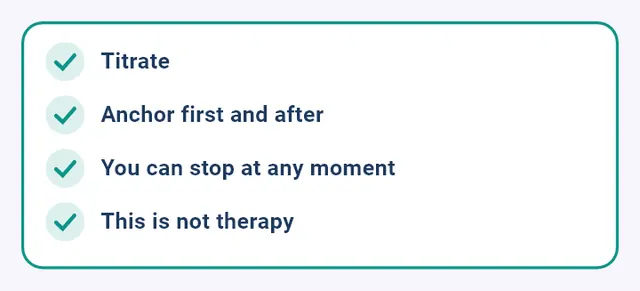
- Titrate. Work in small doses. A few minutes is enough. You are not trying to open everything at once; you are learning to open a little, then close again.
- Anchor first and after. Before you start, feel your feet on the floor, your breath, the room around you. Do the same when you finish. You are the one holding the pen; you can always return here.
- You can stop at any moment. If it becomes too much, put the pen down, stand up, look around the room, name five objects you can see. Stopping is not failure—it is skill.
- This is not therapy. Active imagination is a reflective practice, not a treatment. If difficult material surfaces and stays, or if you live with trauma, please work alongside a qualified therapist. This lesson does not replace professional care.
Approached gently, dialogue is one of the most direct tools in shadow work. Approached with force, it can overwhelm. Gentleness is the whole method.
How the Dialogue Works
Choose one card that carries a live charge for you—something you feel rather than merely think. Sit with the image. Then write.
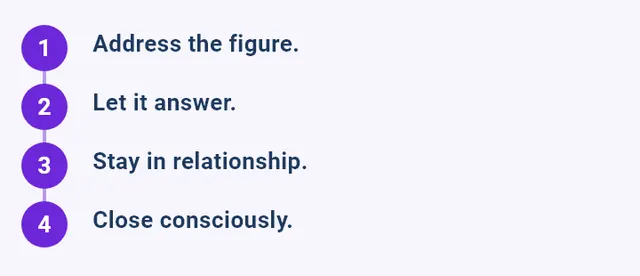
- Address the figure. Write a direct question to it: "Who are you? What do you want me to see?" Use its name—the Devil, the Nine of Swords, the figure in the Moon.
- Let it answer. Write the reply as if it comes from the card, without censoring or steering it. This feels strange at first; that is fine. You are giving disowned material a voice.
- Stay in relationship. Keep the exchange going as long as it feels workable. Ask follow-up questions. Notice where you resist what it says.
- Close consciously. Thank the figure. Write a closing line. Anchor again in the room.
The aim is not to obey the shadow or to be frightened of it, but to know it—to move from being run by unconscious material to being in conversation with it.
Shadow Journaling
Not every session needs a full dialogue. A simpler daily form is shadow journaling: draw one card, and write freely for a few minutes on what it stirs. Where have I felt this today? Whom does this remind me of? What am I not admitting? Over weeks a pattern emerges on the page that the mind alone would keep hidden.
Working with What Arises
Whatever comes—an image, a strong feeling, a memory—meet it with the same compassion the whole journey asks for. You are not confronting an enemy; you are giving a frightened, exiled part of yourself the chance to be heard. If it says something harsh, you do not have to agree; you only have to listen. And if at any point the door has opened wide enough, close it, anchor, and rest. The work keeps for another day. Steadiness, not intensity, is what integrates.
Key Points
- Active imagination is Jung's waking, conscious dialogue with inner figures—tarot gives those figures a face
- Safety comes first: titrate into small doses, anchor before and after, and stop the moment it is too much
- This is a reflective practice, not therapy; if difficult material stays or you live with trauma, work with a qualified therapist
- In dialogue you address the card, let it answer without censoring, stay in relationship, then close consciously
- Shadow journaling is a lighter daily form: one card, a few minutes of honest free-writing
- Steadiness integrates more than intensity—gentleness is the whole method
Exercises
- Anchoring drill: before any dialogue, spend one minute noticing feet, breath and three objects in the room. Repeat it as your closing ritual every time.
- Write a short dialogue with one charged card: address it, let it answer for a few lines only, then thank it and close. Keep the first attempt deliberately brief.
- Shadow journaling for a week: draw one card each day and free-write for three minutes on what it stirs, without editing.
- Titration check: after each session, rate how activated you feel from 1 to 5. If it reaches 4 or 5, shorten the next session and lengthen the anchoring—or pause and seek support.
Further Reading
- C.G. Jung, "Man and His Symbols" (1964)
- Sallie Nichols, "Jung and Tarot: An Archetypal Journey" (1980)
- Babette Rothschild, "The Body Remembers" (2000)