
On this page
Introduction
One of the most liberating discoveries in tarot is this: you don't need to memorize 78 card meanings to give profound readings. In fact, excessive reliance on memorized definitions can actually block intuition and create rigid, lifeless interpretations. The cards themselves are visual teachers—each image contains layers of symbolic information designed to speak directly to your subconscious mind.
Reading without memorization doesn't mean reading without knowledge. Rather, it means engaging directly with what you see, allowing the imagery to activate your personal associations, memories, and insights. This approach honors both the artist's symbolic choices and your own unique perceptual lens, creating readings that are simultaneously grounded and deeply personal.
The Power of Visual Storytelling
Cards as Visual Narratives
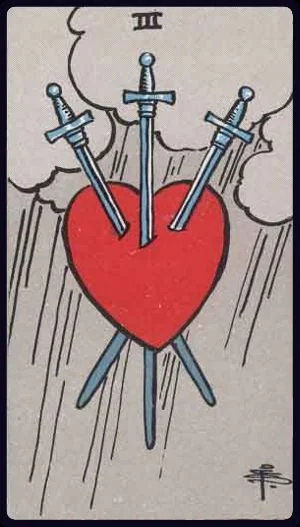
Every tarot card tells a story through its composition, colors, symbols, and figures. Before you ever learned what the "Three of Swords" means, you saw three swords piercing a heart—a universal image of pain, betrayal, or painful truth. That direct visual impact is your primary source of meaning.
Elements of Visual Reading:
Figures and Their Actions: What are they doing? Standing, sitting, reaching, turning away? Body language reveals intention and emotional state.
Gaze and Attention: Where are figures looking? What captures their focus? This shows priority and awareness.
Colors: Red for passion, blue for calm, yellow for mental activity, green for growth. Your instinctive color associations are valid.
Symbols: Swords (thoughts, conflict), cups (emotions, relationships), wands (creativity, action), pentacles (material, body).
Landscape: Mountains (challenges, distance), water (emotions, unconscious), sky (mental realm, possibility), ground (practical reality).
Number: One (beginning, unity), two (choice, partnership), three (synthesis, creativity), and so on—numbers carry meaning beyond the suit.
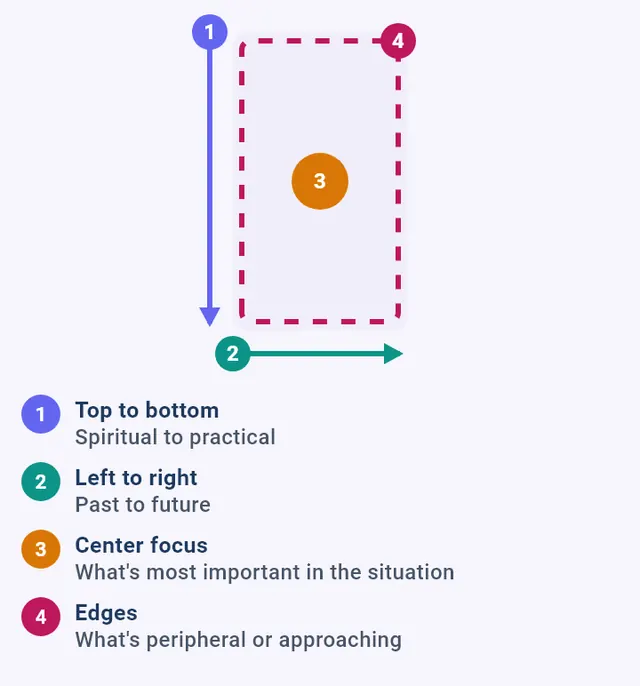
The Compositional Story
Notice the flow of energy in the card:
- Top to bottom: Spiritual to practical, idea to manifestation
- Left to right: Past to future, what's known to what's emerging
- Center focus: What's most important in the situation
- Edges: What's peripheral or approaching
The artist composed each card deliberately. Trust that composition to guide your eye and your interpretation.
Personal Associations: Your Symbolic Vocabulary
You already have a rich symbolic vocabulary built from your life experience. A dog might mean loyalty to you, but if you were bitten as a child, it might signal betrayal or danger. Both are valid—the cards speak through your personal lens.
Building Your Association Library
The Image Dialogue Exercise:
When you see a card, ask yourself:
- What's the first thing I notice?
- What does that remind me of?
- If I were in this scene, what would I be feeling?
- What story is unfolding here?
- What advice would I give this figure?
Your answers create a personal meaning that's often more accurate than any book definition.
Cultural and Personal Symbols
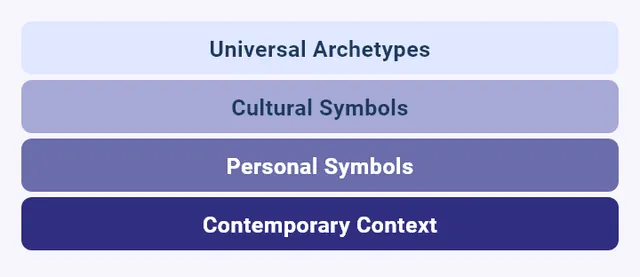
We all carry layers of symbolic meaning:
Universal Archetypes: Mother, father, child, hero, trickster—these transcend culture Cultural Symbols: Specific religious, mythological, or folk imagery from your background Personal Symbols: Your grandmother's garden, your first car, your fear of heights Contemporary Context: Modern situations the original artists couldn't have imagined
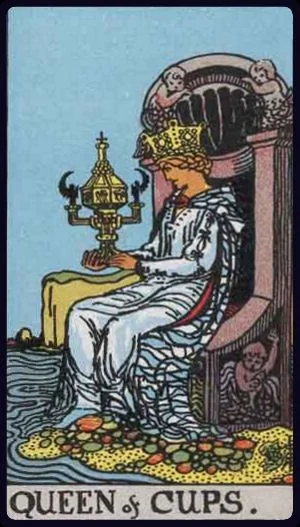
Allow all these layers to inform your reading. The Queen of Cups might evoke your compassionate aunt, or a therapist who helped you, or the way you feel near water.
Working with Unfamiliar Decks
Reading unfamiliar decks is one of the best ways to develop imagery-based reading skills because you can't fall back on memorized meanings.
The Beginner's Mind Approach
When you encounter a new deck:
- Resist the urge to match it to your familiar deck: Let this card be its own entity
- Describe what you actually see: Not what "should" be there, but what is there
- Trust the artist's choices: If they added a fox, a mirror, different colors—these are intentional
- Notice your emotional response: How does this version make you feel differently?
Practice: Deck Comparison Reading
Draw the same card from three different decks. Notice:
- What changes between versions?
- Which details speak to you most strongly?
- How would you read each differently?
- What does each artist emphasize?
This exercise trains you to read imagery, not memorized concepts.
From Memorization to Recognition
There's a difference between memorizing card meanings and recognizing symbolic patterns. Memorization is rigid ("Three of Swords always means heartbreak"); recognition is fluid ("I see pain, piercing truth, the need to face something difficult—what does that mean for this question?").
The Symbolic Pattern Method
Instead of memorizing specific meanings, recognize broader patterns:
Aces: Pure potential, new beginnings, gifts, essence Twos: Balance, choice, partnership, duality Threes: Creation, synthesis, initial completion, triangulation Courts: Personality types, people in your life, aspects of yourself Major Arcana: Life lessons, spiritual themes, major turning points
With these broad patterns plus the visual details, you can read any card in any context.
Building Fluency
Think of learning tarot like learning a language. You don't memorize every possible sentence; you learn grammar (patterns) and vocabulary (symbols) and then create meaning in the moment. Visual reading develops this fluency.
Practical Exercises
Exercise 1: Pure Visual Reading
Take five cards you rarely work with. Without consulting any reference, speak aloud everything you observe for 2-3 minutes per card:
- Describe the scene in detail
- Notice colors, numbers, symbols
- Create a story about what's happening
- Imagine you're the figure—what would you say?
Record yourself. Listen back and notice how much meaning emerged purely from observation.
Exercise 2: Unfamiliar Deck Challenge
Borrow or buy a deck in a completely different artistic style than your usual deck. Do a three-card reading using only what you see in the images. No looking up meanings, no comparing to your familiar deck. Trust the visual narrative.
Exercise 3: Detail Focus
Choose one card. Set a timer for five minutes. Look only at one detail—a bird, a flower, a gesture. Let your mind wander and free-associate around that single element. How does this detail illuminate the whole card?
Exercise 4: Children's Story Method
Explain a three-card reading to an imaginary child who can see the pictures but doesn't know "tarot meanings." You'll find yourself naturally reading the imagery and telling a story rather than reciting definitions.
Exercise 5: Symbolic Swaps
Take a familiar card. In your imagination, change one element—swap the sword for a pen, change the red robe to blue, turn the figure around. How does this change the meaning? This reveals which visual elements carry the most significance.
Exercise 6: Artist's Intention
Study one card for 10 minutes. Research what the artist said about it if possible. Consider: What did they want you to feel? What details did they emphasize? How does understanding their intention deepen your reading?
Trusting the Image
A common fear is "What if I read the image wrong?" But consider: if ten readers see the same card, they'll bring ten different associations, and all can offer value. The "correct" meaning is the one that resonates with the querent's situation.
The image is not a code to crack—it's a mirror to reflect through.
Your personal response to the imagery is not a distortion; it's the reading. The cards work through your particular lens, speaking in your symbolic language. This is not a bug; it's the feature that makes tarot a living, relational practice rather than a mechanical lookup system.
Combining Imagery and Study
Reading imagery doesn't mean ignoring traditional meanings—it means starting with what you see and letting book knowledge enrich rather than override your perception.
A Balanced Approach:
- Look at the card and note your immediate impressions
- Read it based purely on imagery and association
- Then, if desired, consult a reference for additional layers
- Notice what resonates and what doesn't
- Synthesize both sources into a complete reading
Over time, you'll find traditional meanings naturally integrate with your visual reading, creating a rich, multidimensional practice.
Conclusion
The images on tarot cards are not just decorative—they're the primary teaching. Every symbol, color, gesture, and composition choice is a thread in a web of meaning that speaks directly to your subconscious mind. By learning to read what you actually see rather than what you think you should see, you unlock a fluid, intuitive practice that grows with you.
You don't need to carry 78 definitions in your head. You need to bring your eyes, your associations, your life experience, and your willingness to engage with images as living symbols. The cards will teach you what they mean—not by memorizing, but by looking, feeling, and trusting what arises.
In the next lesson, we'll explore how cards combine and interact in spreads, building on this imagery-based foundation to read multiple cards as a flowing narrative.
Key Points
- You don't need to memorize 78 meanings—read what you actually see
- Every card tells a visual story through composition, color, and symbols
- Your personal associations are valid and often more accurate than book definitions
- Figures' actions, gaze, and body language reveal meaning
- Unfamiliar decks train imagery-based reading skills
- Recognize symbolic patterns instead of memorizing specific meanings
- The image is a mirror, not a code to crack
- Start with imagery, then enrich with traditional knowledge
Practices
- Pure Visual Reading: Describe 5 cards in detail without consulting references
- Unfamiliar Deck Challenge: Read with a new deck using only imagery
- Detail Focus: Spend 5 minutes free-associating on one card element
- Children's Story Method: Explain a reading as if to a child
- Symbolic Swaps: Imagine changing elements and notice meaning shifts
- Artist's Intention: Study what the deck creator intended with specific cards
Further Reading
- Mary K. Greer - "The Complete Book of Tarot Reversals" (on flexible interpretation)
- Rachel Pollack - "Seventy-Eight Degrees of Wisdom" (imagery analysis)
- Study multiple decks of the same card to see artistic interpretation variations